01
Krypton Pay
Cross-border rails
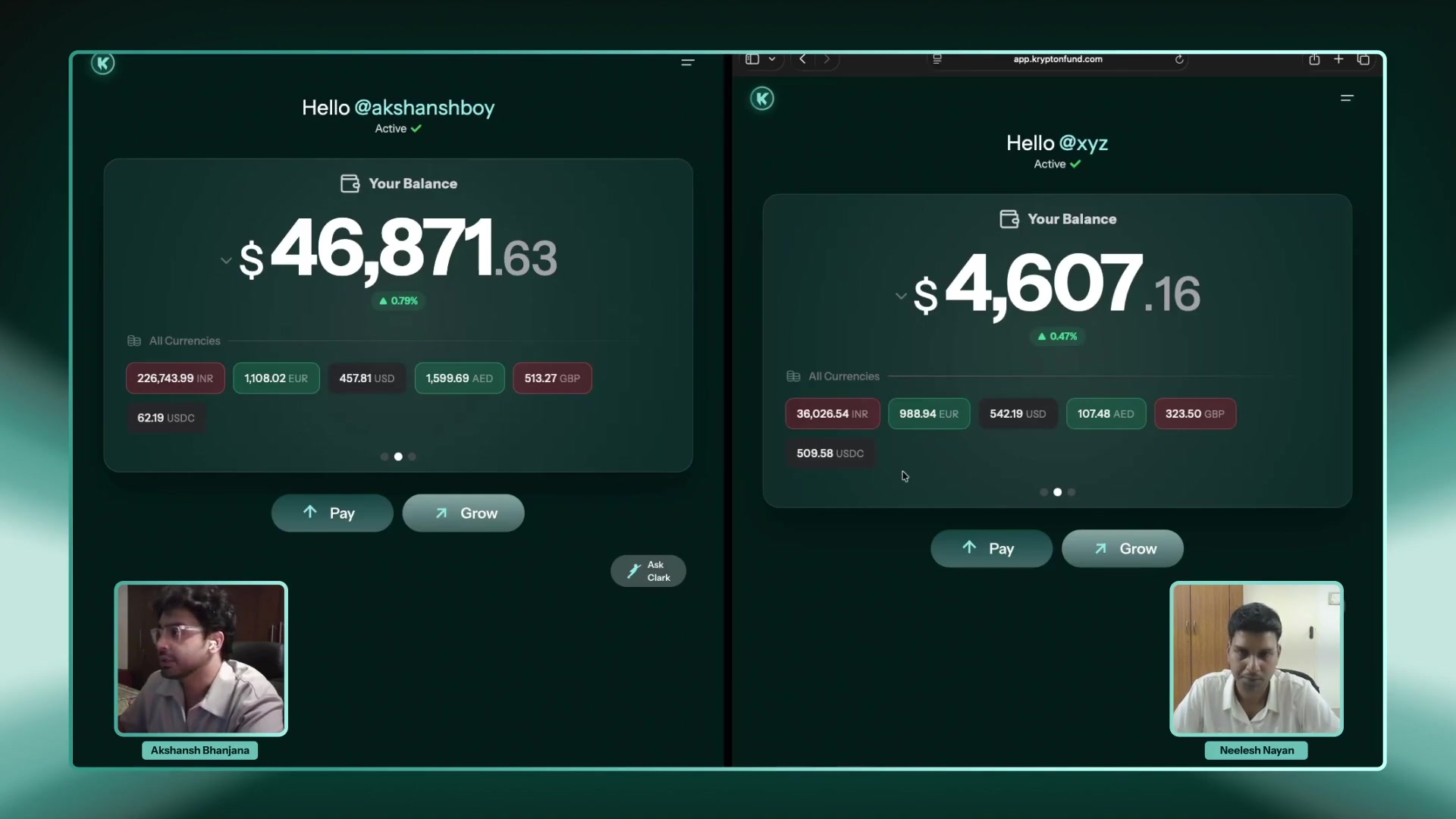
Netting pools hold reserve-backed liquidity in native currency pairs, so INR→AED settles directly. One hop instead of four, at any hour. Idle liquidity routes straight into the Yield Engine rather than sitting dead.
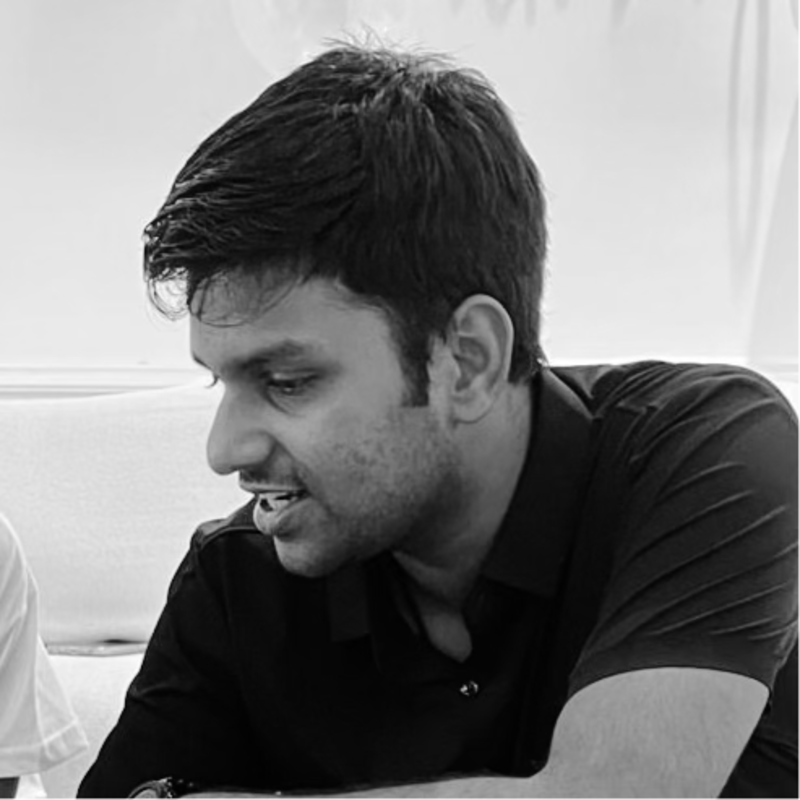
Co-founder & CEO · Krypton
Bengaluru. Before this: six years of payments and liquidity infrastructure inside Goldman Sachs, a robotic kitchen that served real customers, and a medical drone team I started at university.
01 — July 2025 — July 2026
One balance. Always liquid, always earning.
Money lives in separate systems that don't talk to each other — one to pay from, one to hold in, one to earn on — and every hop between them leaks a fee and a few days. Cross-border makes it obvious: an INR to AED payment still routes through dollars, so you pay a spread on the way in and another on the way out.
Krypton collapses those systems into one balance, so money keeps moving and keeps earning at the same time. Clark sits over it as the interface, for a person asking in words or an agent asking over MCP.
Cross-border rails
Netting pools hold reserve-backed liquidity in native currency pairs, so INR→AED settles directly. One hop instead of four, at any hour. Idle liquidity routes straight into the Yield Engine rather than sitting dead.
Intelligent capital allocation
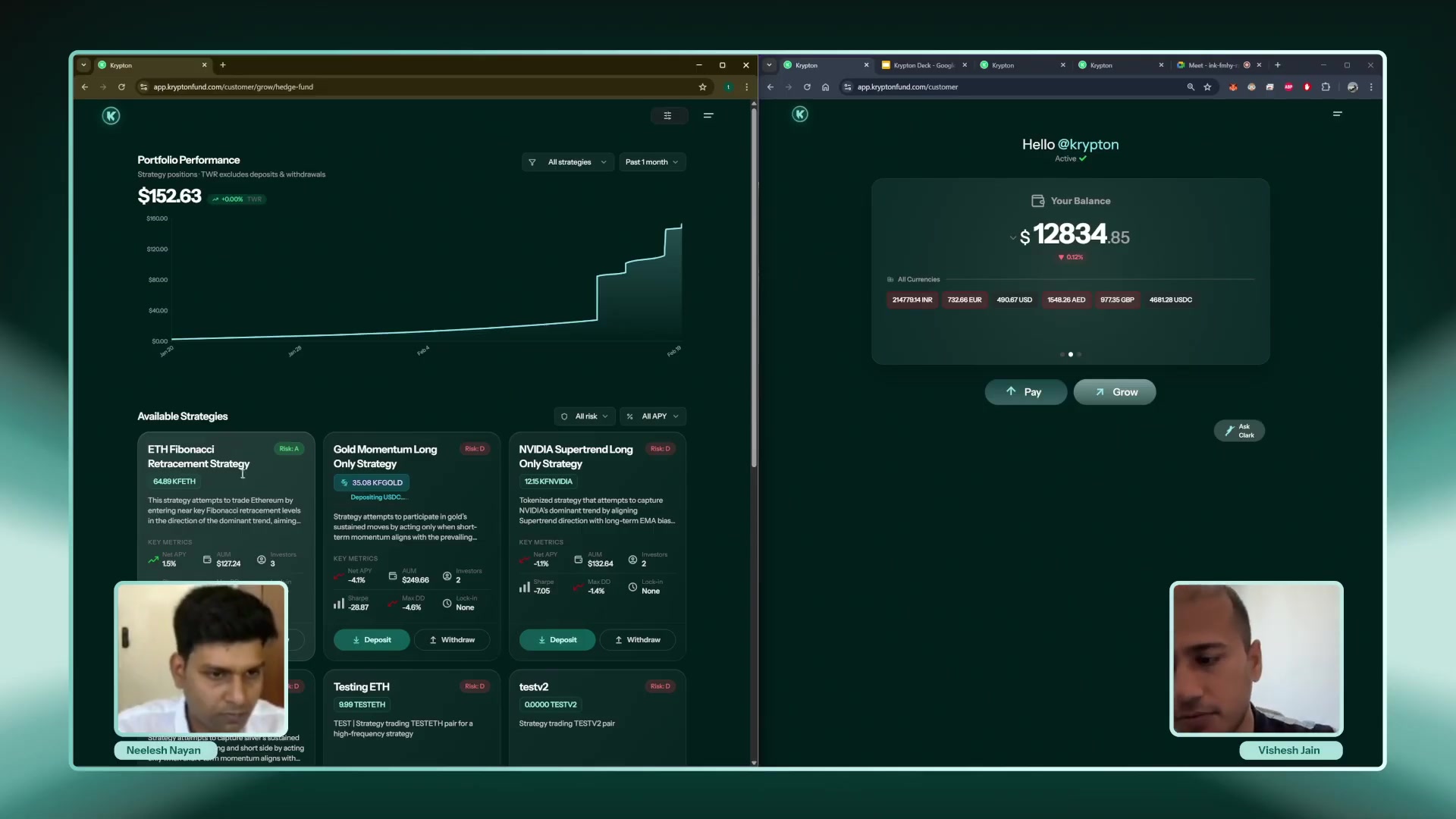
Risk profile in, yield out. Strategies run off-chain on QuantConnect's LEAN and become ERC-4626 vault tokens, backed by tokenised RWAs and tradable on Uniswap. Every strategy carries its own on-chain track record from day one, and the token works as collateral anywhere else in DeFi.
Agentic runtime
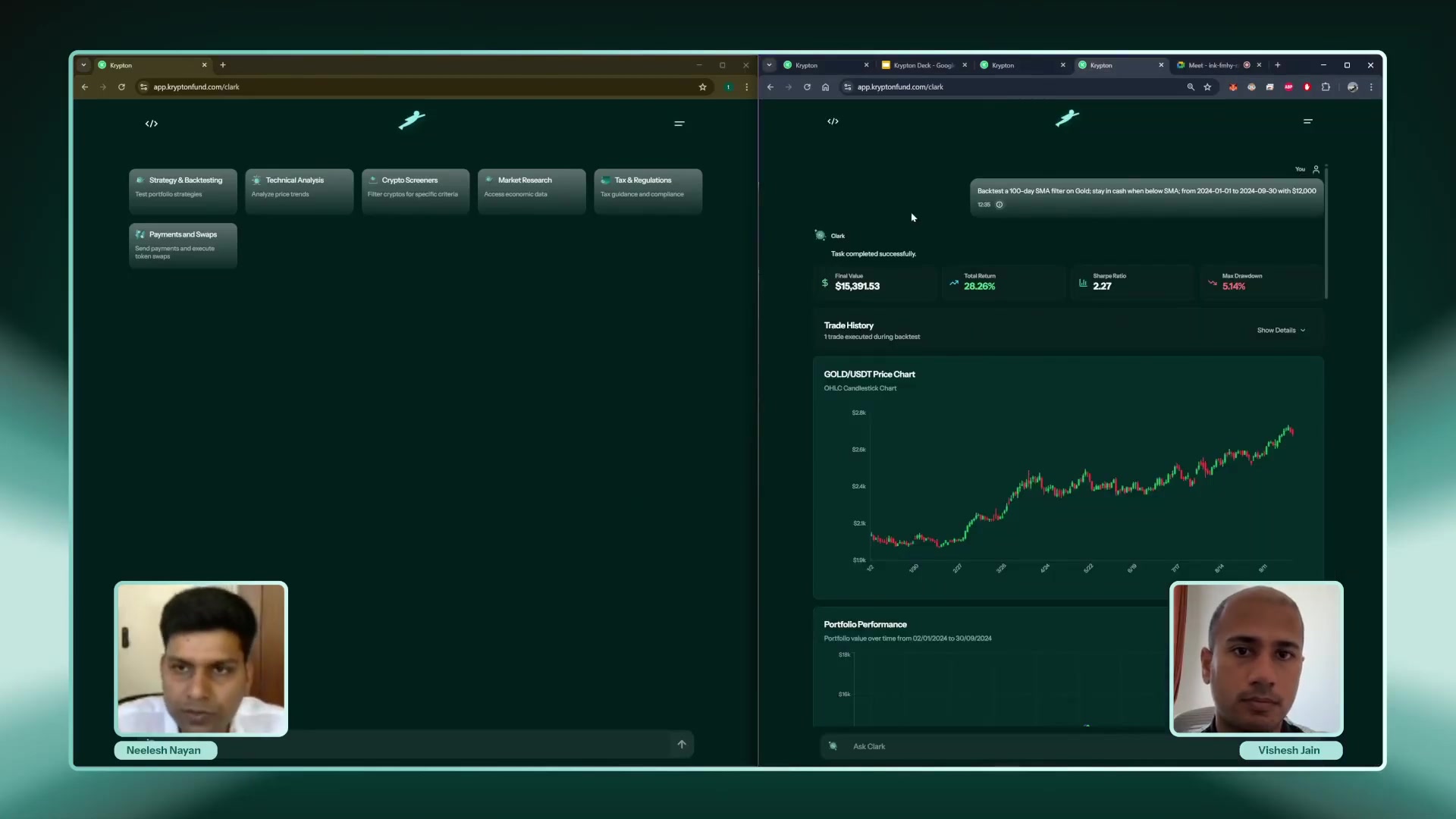
Clark takes natural language and orchestrates payments, portfolio, yield and tax behind it, then opens the same stack to outside AI agents over streamable MCP. Developers ship their own financial agents and earn per call, per AUM, or per yield generated.
Vishesh Jain
Co-Founder & COO
Managing Director at Goldman Sachs, 10+ years of quantitative modelling across mortgages, rates and credit. IIT Delhi, CFA Charterholder.
Dhuruva Priyan GM
AI & Quant Research
PhD candidate at MILA, Quebec AI Institute — deep learning, RL, and quant modelling for strategy execution.
Abhishek Mallik
Agentic Runtime Infra
Software Engineer at Apple. 18+ publications, 900+ citations, 2 patents across AI and big data.
Rushi Shah
Markets & Strategies
Exotic derivatives trader at Morgan Stanley; previously Risk Management at Nomura and Global Markets at Goldman Sachs.
Akshansh Bhanjana
Payments & Web3
Software Engineer at Goldman Sachs, 4+ years across Security Automation and Deposits Engineering in Transaction Banking.
Nirbhay Kumar
Product & Design
Designer at eCW, 4+ years crafting customer-centric products and leading design and growth initiatives.
Krypton Pay
Yield Engine
Clark
02 — 2020 — 2023
Your kitchen on the cloud.
Cooking for myself through lockdown, I kept noticing that a dish is a short sequence of operations — boil, blend, sauté — in the right order at the right settings. Which means you don't want a robot chef. You want a compiler.
So the hardware stayed dumb and cheap: single-purpose modules, one job each. The intelligence went into the software, which turned a dish into a graph of steps and ran whatever could run at the same time. Fifteen people, two patents and paying subscribers, all of it alongside the Goldman job. We never raised a rupee.
The abstraction
Any dish, however complex, is a few fundamental cooking functions applied in the right order. Write the sequence instead of the recipe and every dish comes out of the same small instruction set.
The hardware bet
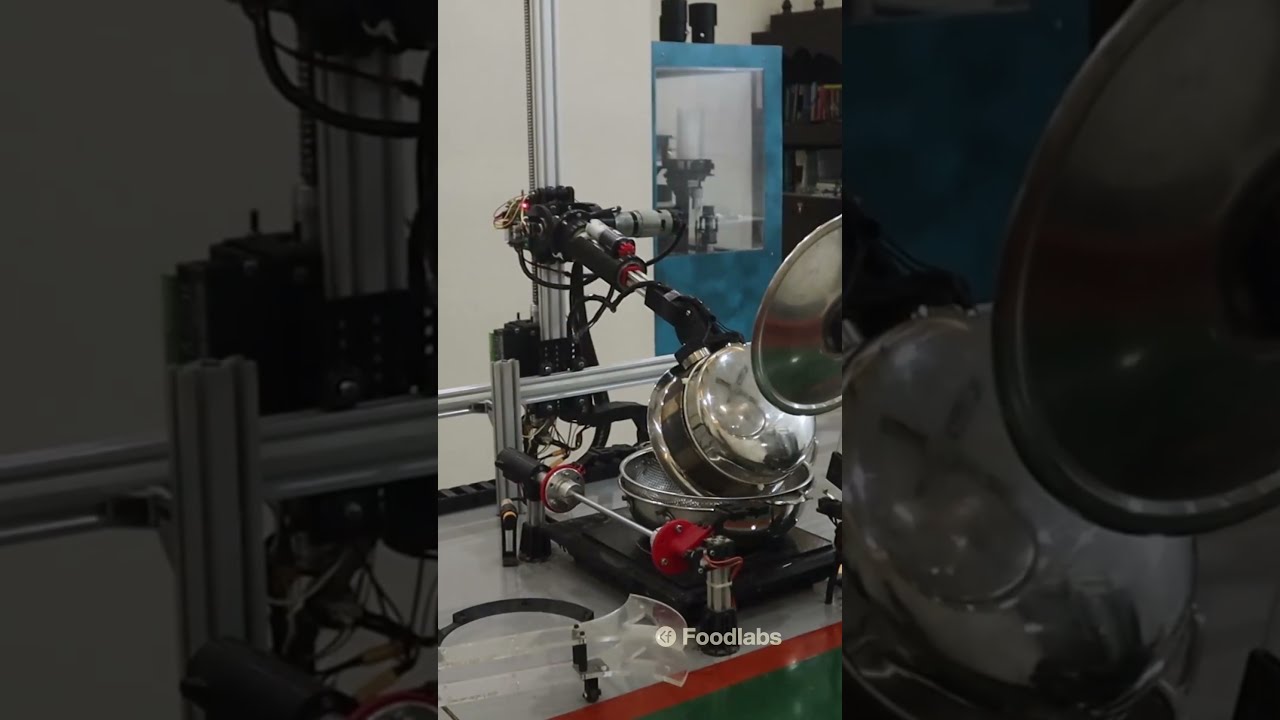
Not one expensive general-purpose robot chef, but cheap single-purpose units that each do one function well. They stack vertically for three-dimensional use of floor space, and each function scales independently with what a location actually cooks.
The orchestration layer
Software is the product. A ROS2 runtime (dispatcher, resource manager, node manager, watchdog) parallelises function nodes into dishes and cut cooking time by ~40%, while a computer-vision loop tunes parameters and redeploys what it learns across every kitchen.
Optimises for macros, taste preferences and kitchen inventory to drive new dish discovery and streamline kitchen operations.
A three-step architecture that orchestrates distributed robots to replicate a recipe from intent, which is what makes remote cooking in a dark kitchen, and a marketplace for dishes, possible.
The AI Kitchen
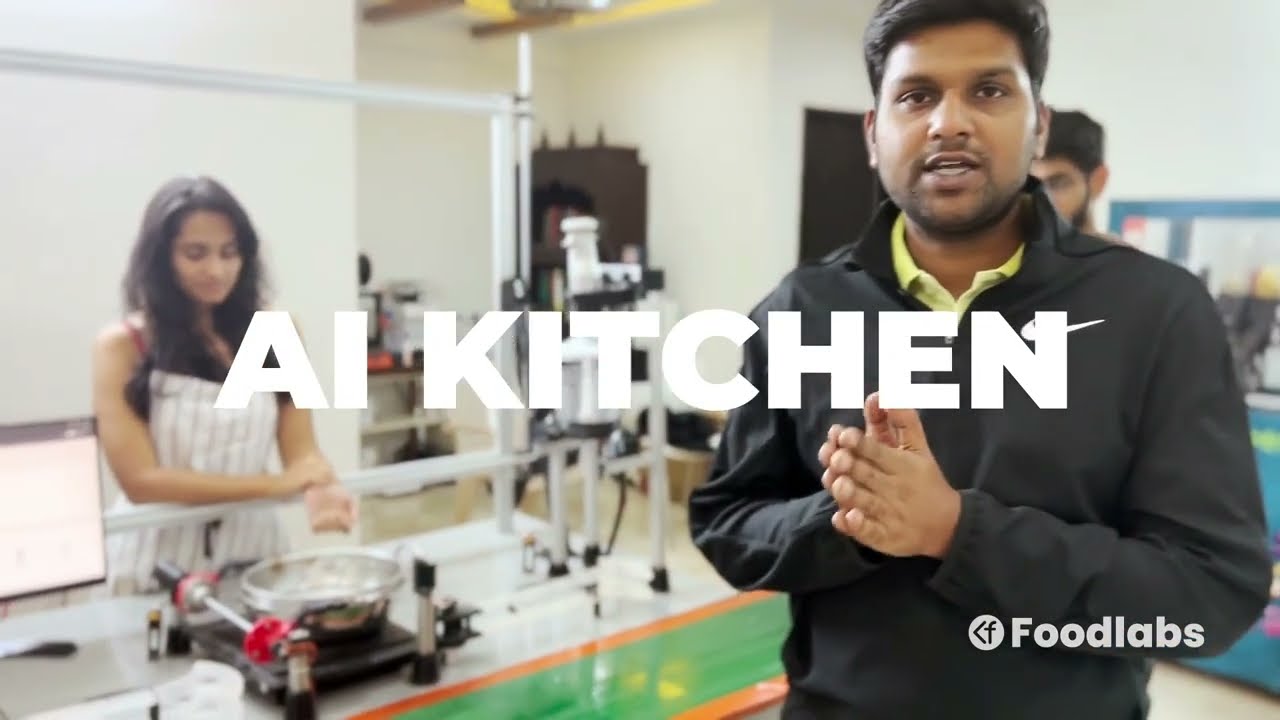
Foodl Go — live at Butterfly Café

The AI Chef

The Art of Digital Cooking

Robotic arm
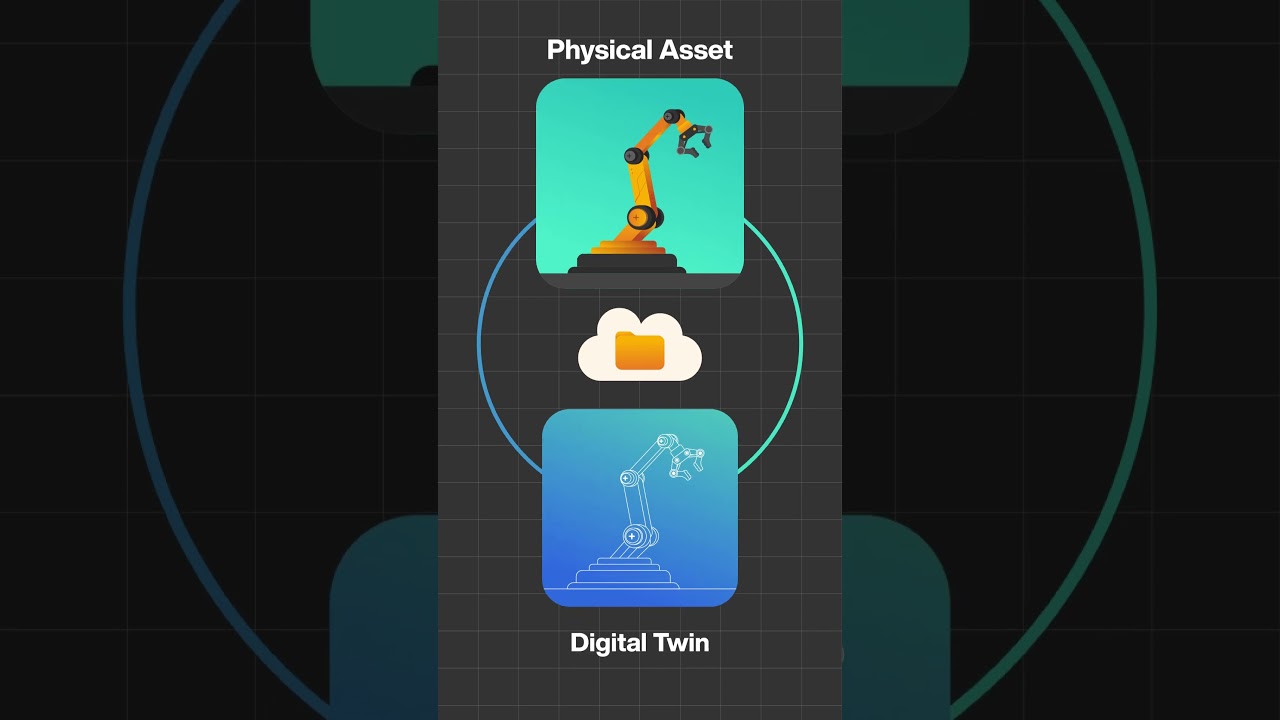
Digital twin
03 — June 2019 — June 2025
Six years as an engineer on the platform Transaction Banking ran its numbers on.
I was an engineer on Transaction Banking's data and analytics platform. The systems underneath it were built to move payments, not to answer questions about them.
So most of the work was getting numbers out of them fast enough to be worth having, and clean enough that Liquidity, Risk, Finance and Sales would act on them without checking twice. Balances, FX, four payment rails, revenue and risk — six years of it, close enough to see how each piece behaves under load.
04 — September 2016 — November 2018
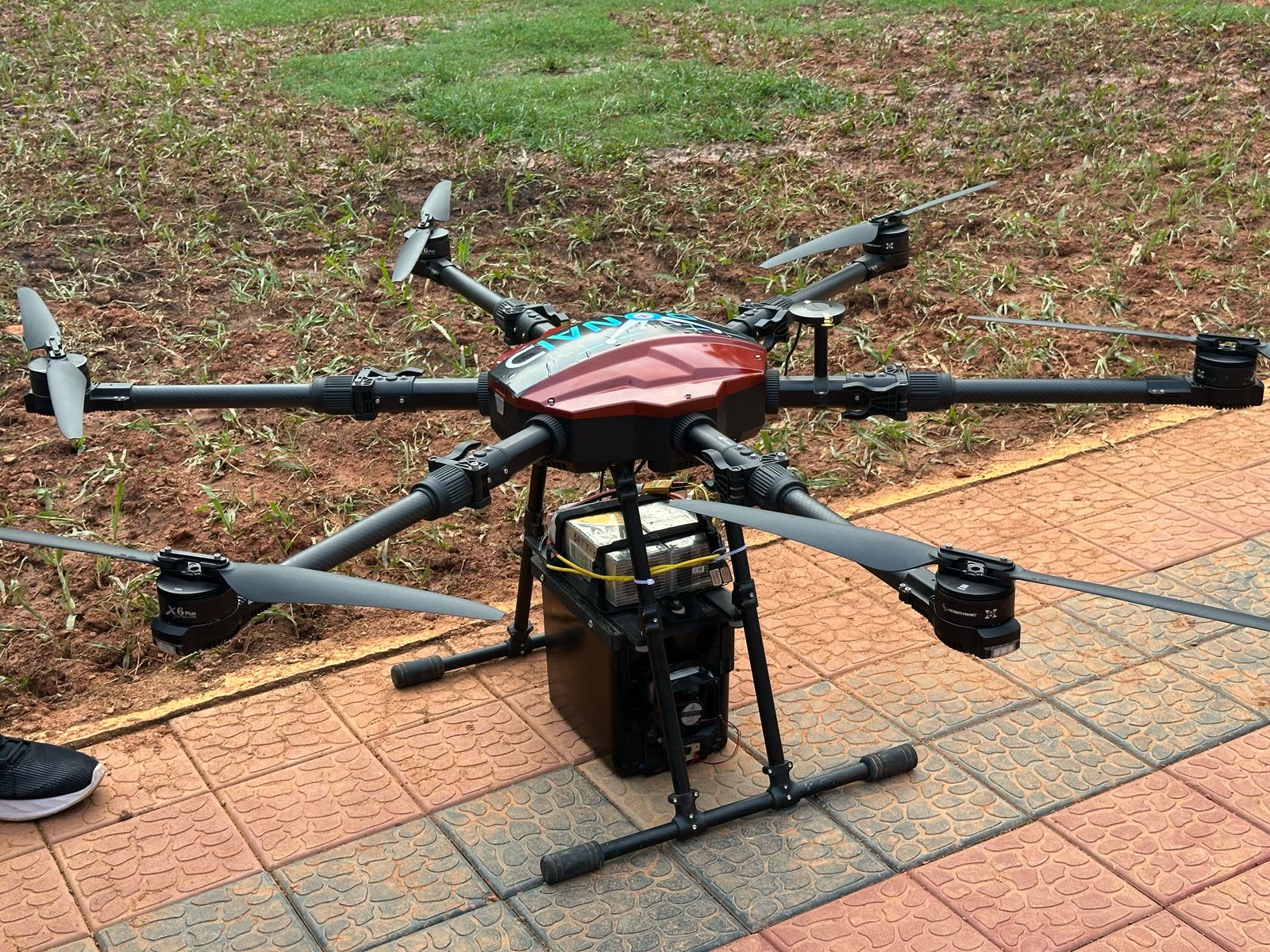
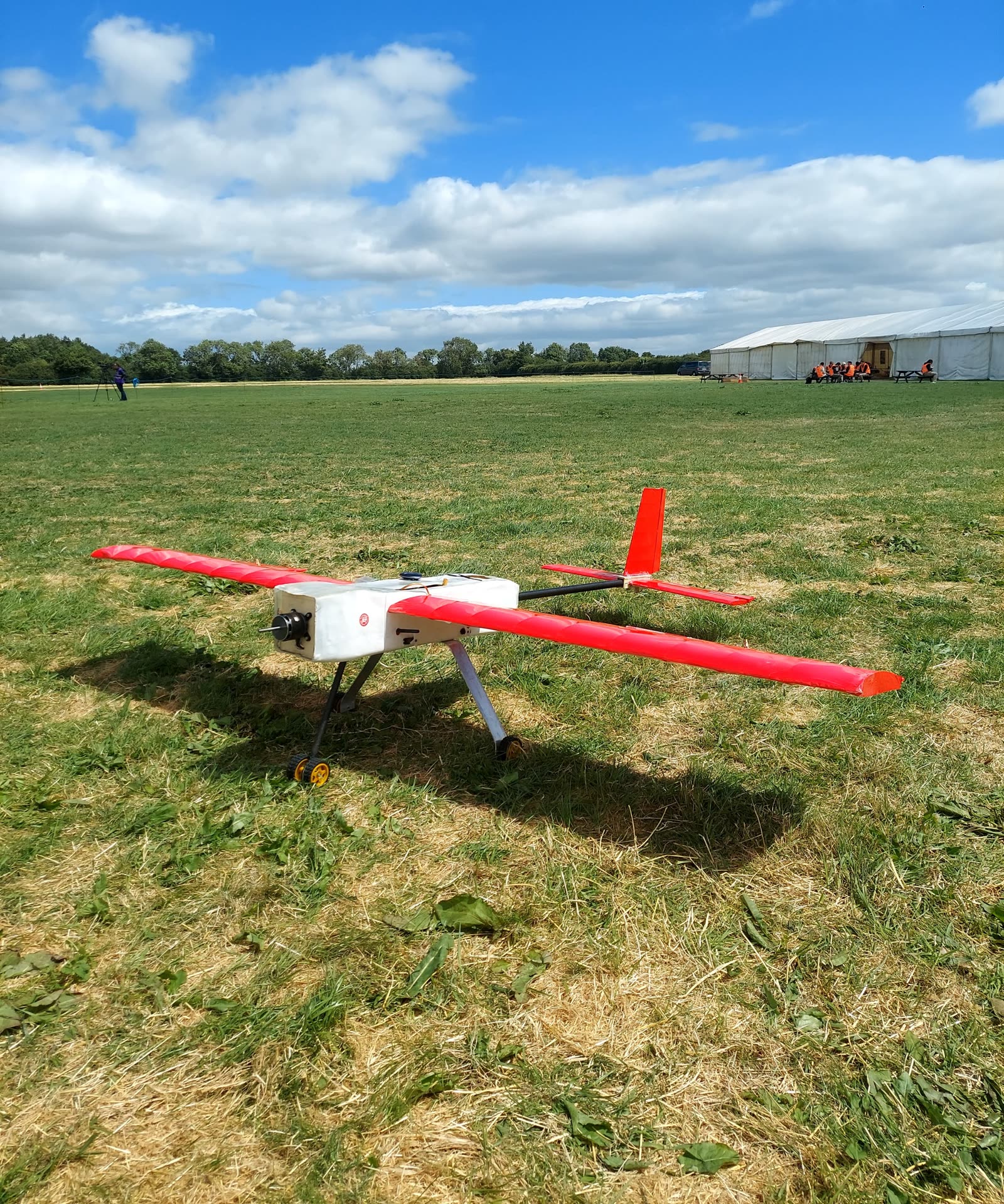
Ambulances get stuck in traffic. Drones do not.
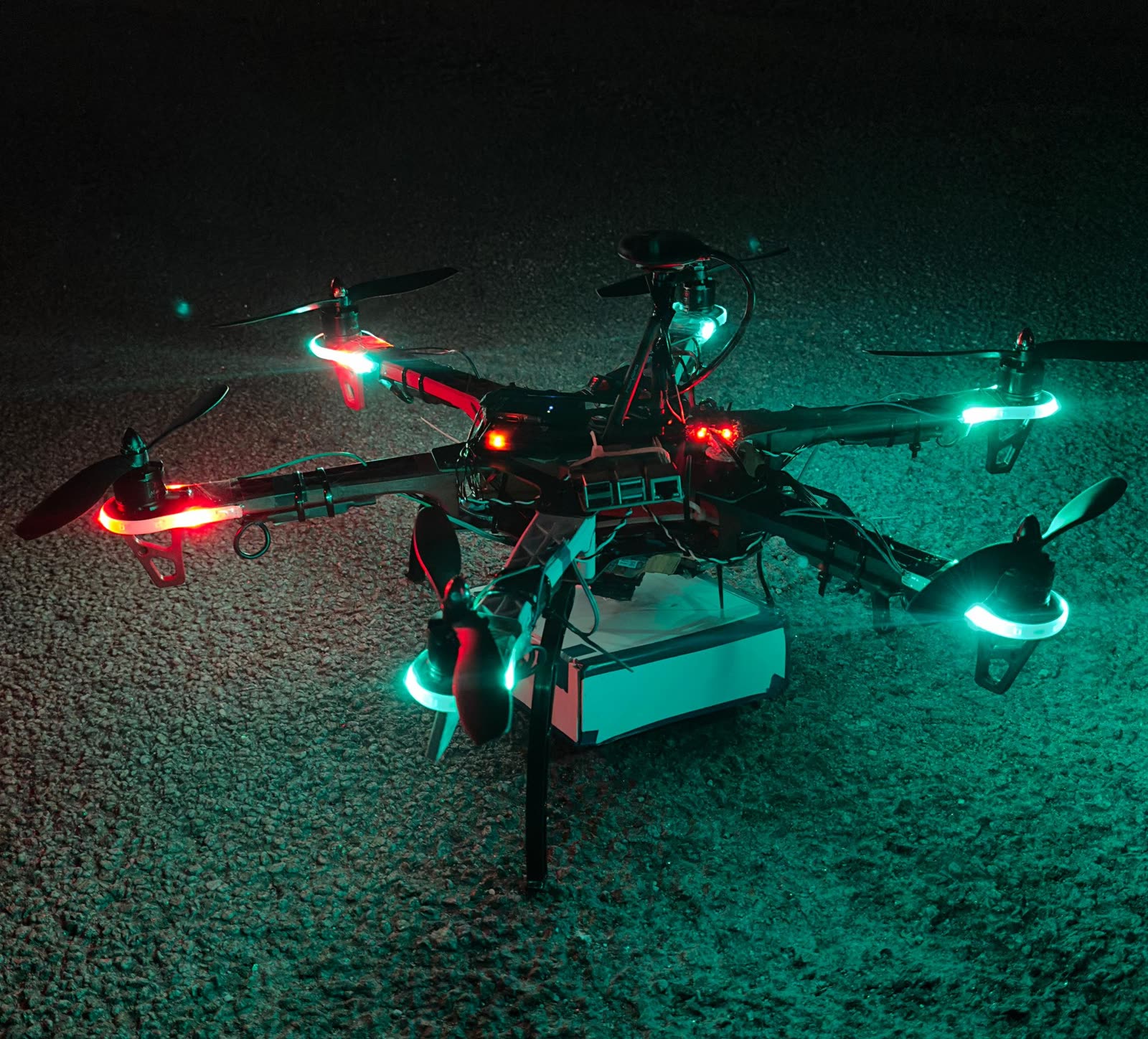
The medicine exists and the doctor exists. What fails is the road between them, and fixing roads does nothing in the ten minutes that decide the outcome. So we went over it — a drone a responder summons from an app, route planned before takeoff, no pilot in the loop.
The airframe turned out to be the easy part. The hard part was the clinical protocol: what to carry, in what, for how long. Which is why five doctors sat with the twenty engineers. Nobody was paid and everybody had classes.
Then Union Minister of State for Electronics & IT, on the team's drones for medical delivery and their use of India's NavIC for positioning. Five years after I handed the team on.
3rd in Asia · 22nd globally · 1st in Design · 5th in Business Use Case
First Runner Up
Both results are from my time leading the team. DronAid still runs at Manipal, with a fleet that now spans Atlas, Icarus, Phoenix, Vayu, Keish, Akira and the Murphy series, and has since competed at Quark Search & Rescue, the Vayurvya RotorCraft Competition, UDGAM, Mangaluru Blue and Elicit Expo.
05 — 2016 — 2018
A student-run NGO that taught kids to code in schools which had never offered it.
India has the youngest workforce in the world, and most of the schools serving it never teach a child to make a computer do anything. That gap doesn't close on its own; it compounds for forty years.
An engineering campus has exactly one thing in surplus — undergraduates who can already code and have free afternoons. Writing the curriculum took a weekend. Getting eighty of them to the same school every week for three years took everything else.
Skills
The architecture around a model, not the model.
Money that crosses borders and survives a regulator reading it.
Pipelines a desk makes decisions off, in real time.
Earlier: robotics and autonomy — ROS, computer vision, sensor fusion and flight systems, across DronAid and FoodLabs.
The thread
The pattern is the same each time: something everyone agrees is broken, that nobody has looked at closely enough to say which part actually fails. Roads fail, so we flew over them. A dish turns out to be closer to code than to a recipe, so we wrote a compiler for it. Payment rails fail in ways I watched from the inside for six years, so there is Krypton.
That instinct doesn't switch off, so two experiments run alongside the main work, both in the open and both unfinished. Neither is a company. One is about who gets seen for which job, the other about whether a model holds a rule when holding it costs something, and neither is a problem I should be poking at alone.
If you work on regulated money or agent infrastructure, or you need an operator for something hard, say hello.
Manipal Institute of Technology · BTech, Computer & Communication Engineering (minor in Digital Marketing) · 2015 — 2019